Laura Blacklock's flat burglary
The Woman in Cabin 10The burglary at Laura Blacklock’s flat is both a violent intrusion into her home and the first event to make her later testimony vulnerable to dismissal. A masked intruder takes her handbag and phone, wounds her, and leaves her trapped in her bedroom by removing the door’s spindle. The attack does not end when he leaves: it reshapes her sense of safety and follows her onto the Aurora Borealis, where her recent trauma, drinking, and medication become grounds for questioning her reliability.
The Intruder and the Attack
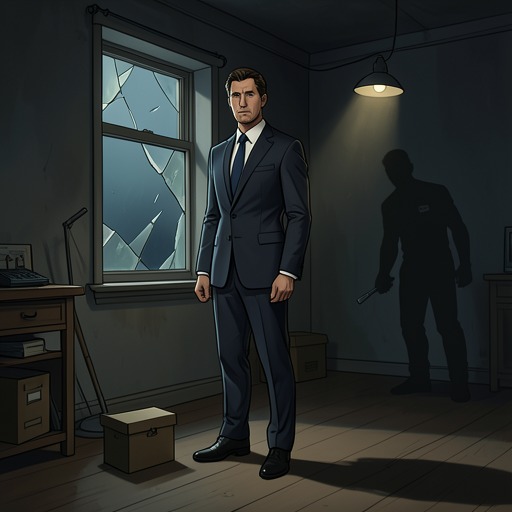
The encounter begins when Laura opens her bedroom door and finds a man standing in the hallway. A hoodie, a bandanna over his nose and mouth, and the darkness conceal his appearance; when she is later questioned, she cannot offer a useful description. His hands, however, are visible, and the latex gloves make the threat feel deliberate. To Laura, they suggest preparation and the possibility that he intends more than theft.
The intruder has Laura’s handbag, but the bag’s brand matters less to her than what is inside: her mobile phone. As he steps towards her, she tries to speak, but he slams the bedroom door into her face before she can finish. The door’s molding cuts her cheek. Shaken and bleeding, she hears him moving through the flat and a crash of breaking glass. She crouches against the bedroom door, gripping its knob and trying to muffle her sobs as she listens to the ransacking. Her immediate fear is not only for herself; she hopes her cat, Delilah, has escaped into the garden and is out of harm’s way.
When the front door finally opens and shuts, Laura does not immediately trust that the intruder is gone. She keeps hold of the bedroom doorknob, her hands numb and stiff, and waits until Delilah’s familiar purr breaks the silence. Only then does she try to leave the room. The handle turns freely, but the latch does not move: the intruder has removed the spindle from the other side, leaving the door unusable from within.
Escape and the Aftermath at Home
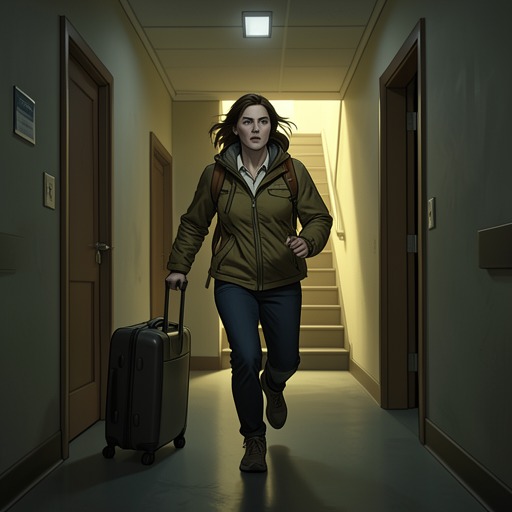
It takes Laura two hours to prize her way out. She has no landline, the bedroom window is covered by security bars, and she has to hammer at the latch with her nail file, breaking it in the attempt. Even after getting into the narrow hallway, she checks each doorway and the hall cupboard before accepting that the intruder has left. The flat has only four rooms, but after the attack every one requires inspection.
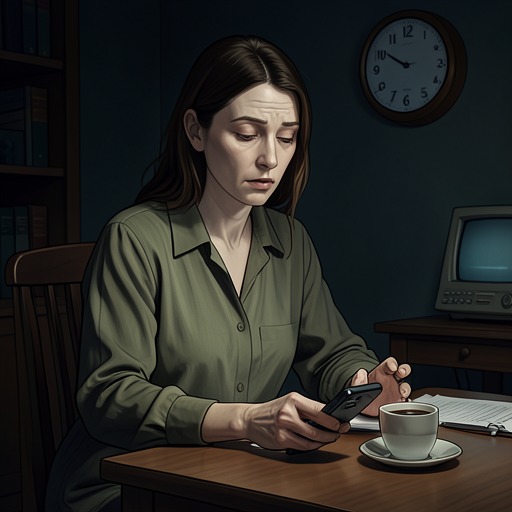
Around four in the morning, Laura goes to her neighbour Mrs. Johnson’s door in her dressing gown, with blood on her face and hands. Mrs. Johnson lets her in, gives her tea, and allows her to use a turn-dial telephone. Laura has lost her mobile with the handbag, and although she considers calling emergency services, she decides the intruder is gone and calls the nonemergency police number instead. The stolen bag contained much of what she relied on outside the flat: money, identification, medication, cosmetics, and her travel card as well as her phone.
The practical repairs underline how exposed the home had been. An emergency locksmith replaces the inadequate bolt-on latch on the front door with a deadlock and points out that the back door’s MDF panel could be kicked in. Laura has no insurance and regrets not having installed a stronger lock. Her distress is not limited to the damage or lost property: she feels that the flat itself has been violated, soiled, and made unsafe. She paces through it, as if reclaiming rooms that no longer feel wholly hers.
A Trauma Carried Aboard
The burglary recurs in Laura’s thoughts after she boards the Aurora Borealis. A flash of a face with shining eyes in the dark makes her sit upright, heart pounding, and feel that she has to get away. Later, while showering, she hears an indistinct noise from her room and sees the bathroom door swing shut. The incident at home gives these ambiguous sounds and movements a frightening context: an ordinary room can again become a place where she cannot see who is approaching or control the door.
The aftermath also affects how others interpret Laura’s report of a suspected crime on the ship. Johann Nilsson asks how much she drank the previous night and raises the break-in when discussing her sleeplessness. Ben Howard has told him about it, along with information about Laura’s mental health and medication. Laura resents the disclosure and fears that these details will be used to cast her as untrustworthy. When she challenges Johann, he argues that her account lacks supporting evidence and links her interpretation to the earlier trauma, alcohol, and medication. Laura insists that none of those facts means she did not see what she says she saw.
The contrast is sharp: the burglary is a real attack in Laura’s own account, but its psychological consequences become part of the argument against believing her about events at sea. Richard Bullmer responds differently when Laura explains that a man entered her flat and attacked her. He says he takes her account seriously and apologizes for a staff member making her feel otherwise. His reassurance matters to Laura because she sees the ship’s owner as someone with the power to act, although it does not erase the way her history has been used to question her.
Narrative Consequences
The burglary establishes a pattern in which Laura’s fear is concrete but her credibility remains contested. She can identify the intruder’s gloves and clothing, describe the wound to her cheek, and explain how she escaped a bedroom whose lock had been disabled; she still cannot identify the man. The missing phone and handbag make the attack materially consequential, while the removed spindle gives the intruder a final means of control even after he has left the flat.
Later, as Laura disappears from the ship, an online discussion speculates about her fate and repeats claims that she has taken medication for depression and has been unstable. The burglary’s disclosure thus travels beyond the immediate conversations with Johann and Ben, contributing to a public narrative that treats Laura’s mental health as a reason to doubt her or imagine her death as self-inflicted. The event functions not simply as backstory but as a vulnerability others can invoke: a wound that is physical, psychological, and social, and that complicates whether her warnings will be heard.